
Preventing the Complications of Diabetes Through Routine Screening
One of the reasons that the high blood sugar is so dangerous is the microscopic damage that it does to blood vessels and nerves throughout the body. Doctors call these issues Microvascular complications.
The good news is that with regular screening this microscopic damage to eyes, nerves and blood vessels can be detected early and prevented.
Diabetic Retinopathy (DR)
Diabetic Retinopathy is the microscopic damage caused to the back of the eye by high blood sugar. The retina is the part of the eye that gathers light info and transfer it to the brain, and is fed by 1000s of small blood vessels. Blood with lots of sugar dissolved in it is thicker. Pushing it through t small blood vessels like these is hard and causes more pressure to build inside the vessel ( think of trying to blow pancake syrup vs water through a straw). This pressure can cause small vessels in the eye to burst and damage the surrounding retinal tissue. Over time these small aggressions to the retinal tissue can accumulate and lead to significant vision loss.
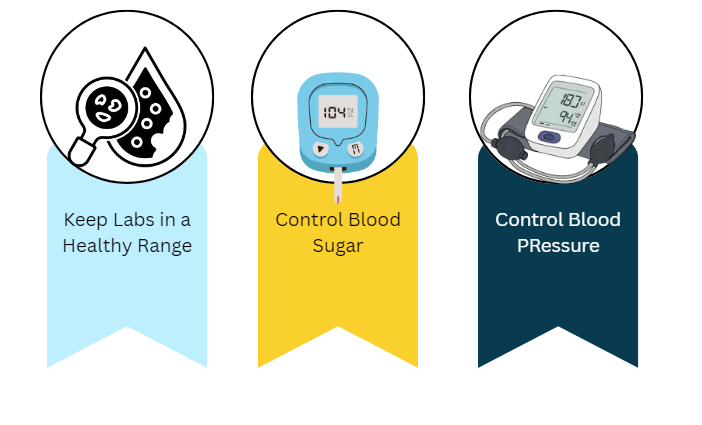
Luckily, keeping your blood sugar, blood pressure and blood fats like cholesterol in a healthy range can prevent the onset and progression of eye disease. Also meeting regularly with your eye doctor can help identify this issue early and prevent any further damage.
Prevent or Delay Diabetic Eye Disease
How
Routine dilated and comprehensive eye exams are vital for maintaining your eye health. Retinal photography screenings with an ophthalmologist or optometrist can allow for timely treatment to prevent or reverse vision loss.
When
- For people with type 1 diabetes: 5 years after the onset of diabetes
- For people with type 2 diabetes: at the time of diabetes diagnosis
- For people with preexisting diabetes: before and in first trimester of pregnancy
When to Follow Up
- At least annually for people with any level of retinopathy
- Every 1–2 years for those with no retinopathy for one or more annual exams and well-managed blood sugar.
- More frequently for those with progressing or sight-threatening retinopathy.
- Before pregnancy, first trimester, possibly every trimester and for 1 year postpartum based on degree of retinopathy
Connect with an Organization for Support
Kentucky Lions Eye Foundation – Offers a Low Vision Clinic in Louisville for individuals with diabetic retinopathy and other vision conditions. Their clinic specifically mentions low vision exams and rehabilitation support.
Website: Kentucky Lions Eye Foundation Low Vision Clinic
Kentucky Office for the Blind – State resource that can connect individuals to vocational rehabilitation, assistive technology, orientation/mobility training, and independent living services for vision loss.
UofL Health Eye Institute – Their Low Vision Rehabilitation Center provides occupational therapy and adaptive strategies for people with low vision, including diabetes-related vision loss.
Website: UofL Health Low Vision Rehabilitation Center
Bluegrass Council of the Blind – Provides assistive technology training, peer support, and low vision resources for adults across Central Kentucky.
Website: Bluegrass Council of the Blind
St. Claire HealthCare – Offers low vision therapy services specifically mentioning diabetes-related vision loss.
Website: St. Claire HealthCare Low Vision Therapy
Kentucky Council of Citizens with Low Vision – Support and educational organization for Kentuckians experiencing low vision from diabetes and other conditions.
Resources to Learn More
NEI Diabetes and Healthy Eyes Toolkit – National Eye Institute
Don’t Lose Sight of Diabetic Eye Diseasefactsheet – National Eye Institute
Eye Health Resources – American Diabetes Association